What Is Print-on-Demand Automated Order Routing?
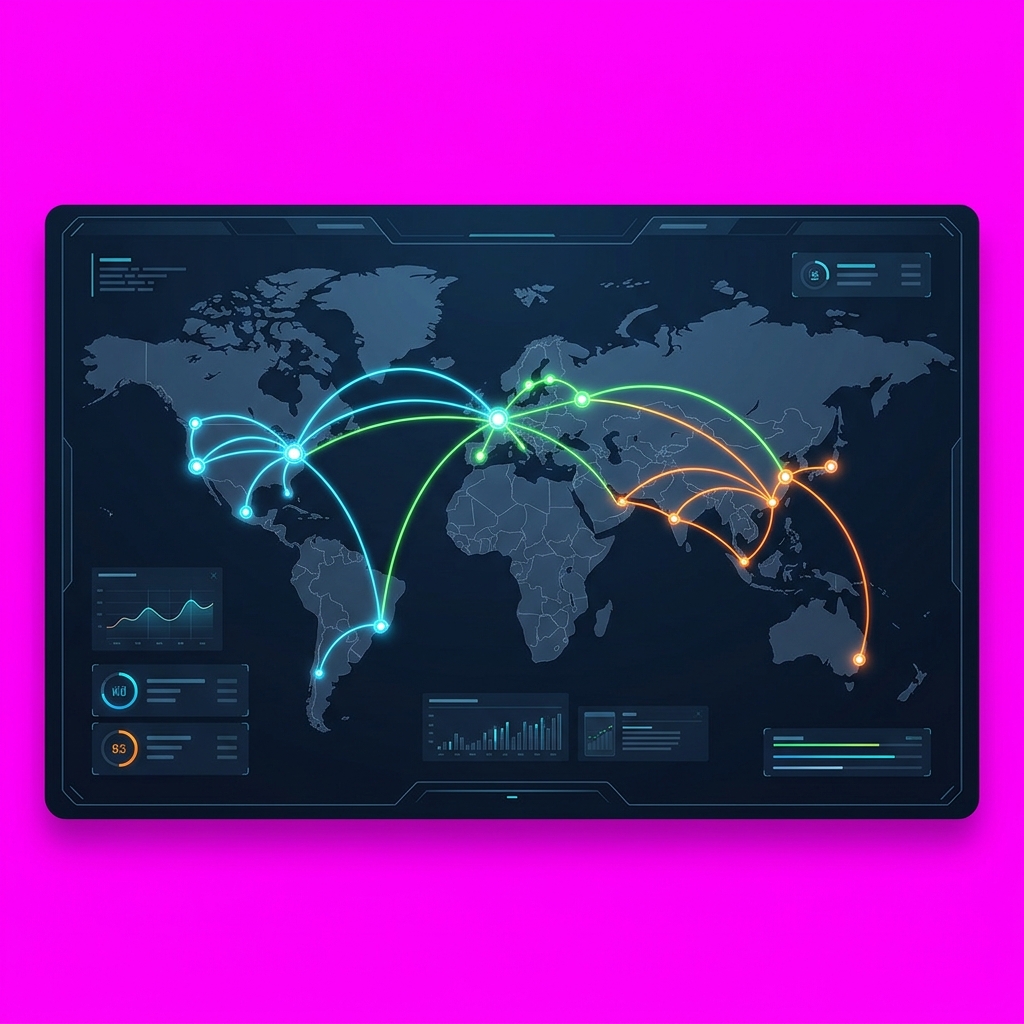
Print on demand automated order routing is the algorithmic process of directing customer orders to the most suitable fulfillment partner based on predefined rules like inventory availability, supplier cost, geographic proximity, and shipping speeds. When a customer purchases multiple items produced by different manufacturers, an intelligent routing system splits the cart and sends each item to the optimal supplier automatically.
Running a successful print-on-demand (POD) store on Shopify or Etsy often means working with multiple suppliers. One partner might offer the lowest base price for standard t-shirts, while another has superior canvas print quality and faster turnaround times.
Without a smart routing system, multi-item orders create a logistical headache. If a single supplier doesn't stock every item in a customer's cart, manual intervention is required, or worse, orders get canceled and profits vanish.
The Problem with Multi-Item Carts in POD
When a customer buys a mug, an embroidered hoodie, and an enamel pin in a single checkout, they expect one streamlined delivery. However, very few POD suppliers manufacture every single product category in-house.
If you rely on a single supplier to handle everything, you often compromise on quality or price. You might be forced to source mugs from a mediocre provider just because they also print your apparel.
On the other hand, if you partner with best-in-class specialists for each product type, multi-item carts instantly fracture. If your automation tool cannot split the order, you face major operational hurdles:
- Forced Manual Splitting: You have to manually log into different supplier dashboards to re-create parts of the customer's order.
- Inflated Shipping Costs: If a supplier has to fulfill only part of an order and source the rest elsewhere manually, you may pay multiple base shipping fees that eat your margins.
- Tracking Nightmares: Customers receive multiple tracking numbers with no cohesive update emails, leading to a spike in customer support tickets.
Core Criteria for Smart Order Routing Logic
Implementing print on demand automated order routing requires defining clear conditional logic. A robust routing engine evaluates incoming Shopify or Etsy orders against specific parameters before dispatching them to production.
1. Cost Optimization (Cheapest Supplier)
Profit margins in e-commerce are razor-thin. Your primary routing rule should often prioritize the lowest total cost (base product price plus shipping cost to the destination country).
- Rule setup: If an item is available from Supplier A for $12 and Supplier B for $14 (with identical shipping zones), the system automatically routes the item to Supplier A.
- Nuance: Always factor in shipping zones. A cheaper base product from a supplier in Asia can easily become more expensive than a domestic supplier once international shipping is added for a US-based customer.
2. Geographic Proximity (Closest Supplier)
Shipping speed directly correlates with customer satisfaction and lower chargeback rates. Routing rules should direct production to the facility closest to the end buyer.
- Rule setup: If a customer orders from California, route the apparel to a West Coast fulfillment hub rather than a facility in New York or Europe.
- Benefits: Reduced transit times, lower carbon footprints, and fewer customs delays for international buyers.
3. Inventory and Stock Availability
Nothing kills repeat business faster than selling an out-of-stock item. Intelligent routing includes fallback suppliers.
- Rule setup: Primary Supplier X is assigned to standard t-shirts. If Supplier X reports a stockout on black size large tees, the order automatically reroutes to backup Supplier Y without manual delay.
4. Quality and Technique Specialists
Certain products require specialized printing techniques, such as DTG (Direct-to-Garment), embroidery, or sublimation.
- Rule setup: Flat-surface posters go to your poster specialist, while structured dad hats automatically route to your top-tier embroidery partner.
How to Implement Automated Routing in Your Store
Setting up automated routing requires bridging your e-commerce platform (Shopify or Etsy) with an operations management layer or automation SaaS like PallFlow.
- Centralize Catalog Mapping: Map your master product catalog to multiple suppliers within your automation platform. Ensure SKUs and variants are correctly synced.
- Establish Priority Hierarchies: Rank your suppliers for each product category. Designate a primary supplier and a secondary fallback supplier.
- Configure Split-Order Rules: Set thresholds for shipping consolidation. Decide if orders should always split immediately or if you prefer to wait for consolidation (though instant splitting is usually better for POD delivery speeds).
- Test with Sandbox Orders: Place test orders on your Shopify or Etsy storefront to verify that multi-item carts correctly split and route to the intended supplier dashboards.
Scaling Your Operations Beyond Basic Routing
Automated order routing is just one piece of a scalable print-on-demand tech stack. As your store grows, managing hundreds of listings across multiple sales channels requires end-to-end automation.
Platforms like PallFlow help e-commerce entrepreneurs automate the entire workflow—from AI-driven product design generation and bulk mockup creation to multi-channel publishing on Shopify and Etsy. By pairing content creation with smart fulfillment and order routing, you remove the administrative friction that holds back most growing POD brands.
Conclusion
Print on demand automated order routing transforms multi-item cart chaos into a streamlined, cost-effective fulfillment machine. By establishing clear rules based on cost, location, and stock levels, you protect your margins, speed up delivery times, and deliver a seamless experience to your customers.
Take time to audit your current supplier network, map your product catalog accurately, and implement smart routing rules to scale your store profitably.